How Much Does Solar Cost in Los Angeles Without the Tax Credit?
Rooftop solar in Los Angeles runs about $2.50–$3.50 per watt installed, so a typical 7–9 kW system lands between $18,000 and $30,000. In 2026 that is the final number. The 30% federal Residential Clean Energy Credit under Section 25D ended for systems placed in service after December 31, 2025, which means a $25,000 system that would have cost $17,500 net in 2025 now costs $25,000. Add a 13.5 kWh battery and expect another $12,000–$17,500 installed, roughly $1,000–$1,300 per usable kWh. The one number that went up is local — Burbank Water & Power pays a battery rebate of $530 per kWh to customers who cannot claim a federal credit, versus $275 per kWh to those who can, so a 13.5 kWh Powerwall is worth $7,155 back in 2026 instead of $3,713. These are typical Los Angeles market ranges, not a quote.
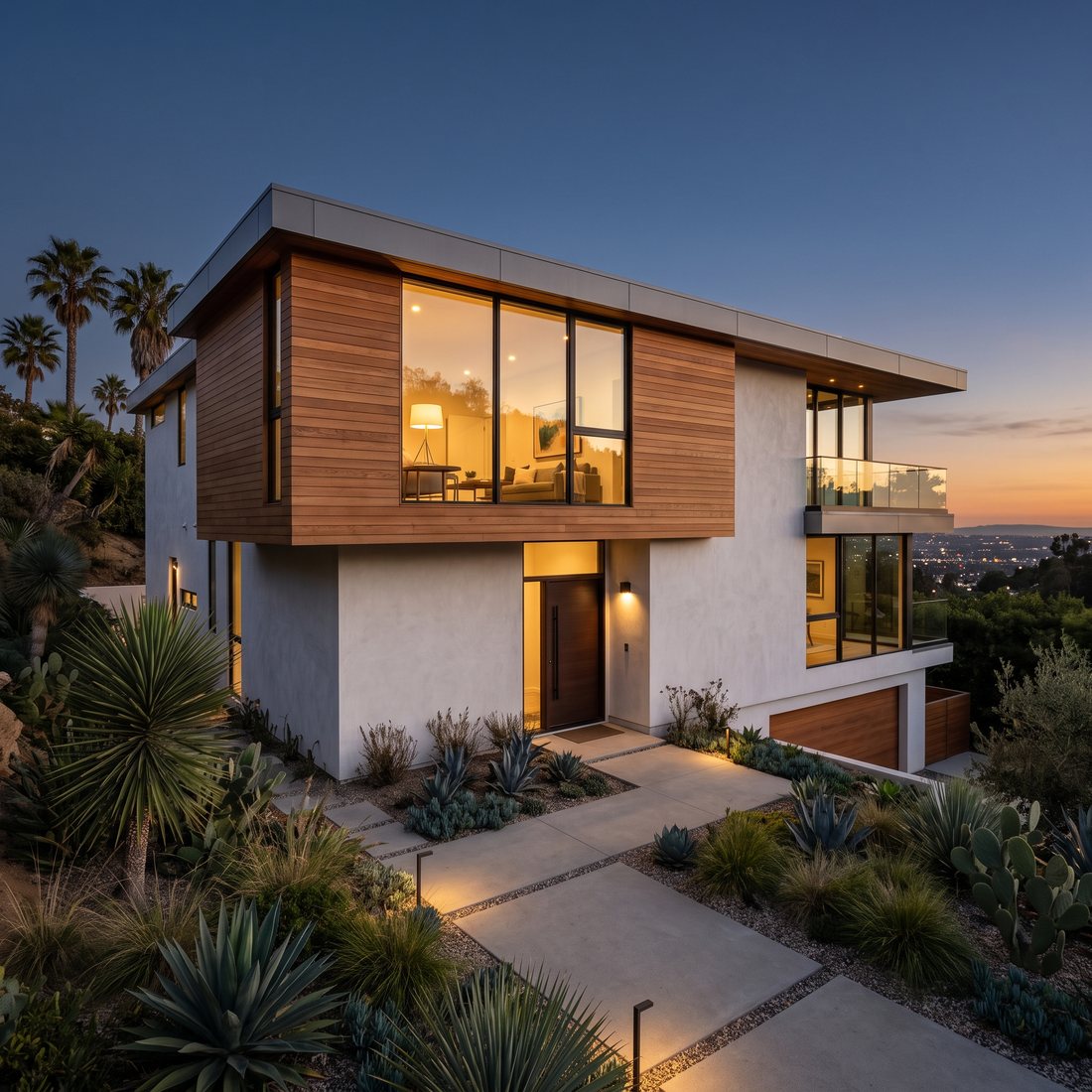
A homeowner in Burbank asked us in February what a solar system costs now. The honest answer is that the sticker price barely moved, but the number you actually pay jumped by roughly a third overnight — and in this part of Los Angeles, a second change landed on the exact same day that most solar content still has not caught up to.
Here is where the numbers sit. These are typical Los Angeles market ranges, not a quote.
What solar costs in LA right now
| Item | Typical LA range |
|---|---|
| Installed cost per watt | $2.50–$3.50 |
| 6 kW system | $15,000–$21,000 |
| 8 kW system | $20,000–$28,000 |
| 10 kW system | $25,000–$35,000 |
| Battery, 13.5 kWh installed | $12,000–$17,500 |
| Battery, per usable kWh | $1,000–$1,300 |
| Battery added later rather than with the array | $1,500–$3,000 premium |
| Main panel upgrade to 200A, if triggered | $2,500–$4,000 |
BWP's own solar FAQ puts recent US installations at $3 to $4 per watt before incentives and prices an 8 kW system at $24,000 to $32,000, which is the conservative end of the same picture. Coastal Southern California runs above the national average on labor and permit fees.
The credit is gone, and "placed in service" is the trap
The One Big Beautiful Bill Act ended Section 25D — the 30% Residential Clean Energy Credit on solar and battery storage — for property placed in service after December 31, 2025. There is no phase-down and no step-down. It is a cliff.
The word that decides your case is placed in service, meaning installed and operational. Not the contract date. Not the deposit. Not the equipment delivery. Homeowners who signed in late 2025 and got switched on in the new year lost the credit entirely, and a number of them did not find out until they sat down with their tax preparer this spring.
Practically, a $25,000 array that netted out at $17,500 last year is a $25,000 array now. That is a real change in the payback conversation, and it is why the rest of this post matters more than it used to: with the federal layer stripped away, your utility and your local rebate program are now the whole story.
We wrote up the broader picture of what LA-area energy rebates survived into 2026 — heat pumps, water heaters, panel upgrades — and the pattern there holds here too. The federal money left. The municipal utility money did not.
The one federal door still open: not owning the system
If a third party owns the array — a lease, a PPA, or a prepaid plan — the tax credit in play is the business-side Section 48E investment credit, claimed by the company that owns the equipment. That credit is available through the end of 2027.
This inverts a decade of standard advice. From roughly 2016 through 2025, buying almost always beat leasing because you personally captured 30% back. In 2026 the only entity that can capture a federal credit on a residential rooftop is the owner, and if that is not you, some of the value can be priced back into your monthly payment.
It is not a free win. You do not own the asset, so it does not add to your home's value the way an owned system does, escalator clauses compound over 20 years, and a lease that a buyer has to assume adds friction at resale. But it deserves a real quote rather than a reflex dismissal, which is a sentence we would not have written a year ago.
Your utility decides the payback, and Burbank just moved
This is where generic national solar content fails Los Angeles completely. NEM 3.0 — the CPUC net billing tariff that cut export credits to roughly eight cents per kilowatt-hour — applies to investor-owned utilities: SCE, PG&E and SDG&E. It does not apply to municipal utilities, and a large share of this market is served by municipal utilities.
| Utility | Export regime in 2026 |
|---|---|
| LADWP | Municipal. Runs its own net energy metering program, not the CPUC net billing tariff. Its direct residential solar rebate has been unfunded since 2018. |
| Glendale Water & Power | Municipal. Own NEM program, no CPUC tariff. Updated interconnection agreement required as of January 19, 2026. |
| Burbank Water & Power | Changed January 1, 2026. New applicants are on Solar Net Billing, exports paid at BWP's avoided cost of energy, time-differentiated. |
| Southern California Edison | Investor-owned. NEM 3.0 net billing since April 2023. |
The Burbank change is the local news almost nobody has written about. The City Council approved Solar Net Billing on January 14, 2025, and it took effect January 1, 2026 — the same day the federal credit died.
What that means in practice, straight from BWP:
- Anyone whose permit application went in before January 1, 2026 is grandfathered on NEM 1.0, for 20 years from the program launch, ending January 1, 2046.
- Grandfathering ends if you add panels that increase system size, or if the property transfers to someone outside your immediate family.
- Grandfathering survives adding a battery, replacing a broken inverter, or swapping a panel for one of the same wattage. That distinction is worth knowing before you let anyone touch an existing array.
- New systems permitted after January 1, 2026 are capped at annual output of 150% of the prior 12 months of usage, with systems 10 kW CEC-AC and under exempt from sizing review. On new construction the ceiling is calculated at 4 watts DC per square foot of conditioned floor area.
If you are remodeling a Burbank house and adding conditioned square footage, that last line is a sizing input, not a footnote. It is one more reason to sequence solar with the rest of the work rather than treat it as a separate project — the same logic behind everything else in our Burbank remodeling guide.
The number that went up: Burbank's battery rebate
Here is the counterintuitive part. BWP's Battery Storage Rebate pays $275 per kWh of installed capacity to customers who received the federal tax incentive, and $530 per kWh to customers who did not. In 2026 a homeowner buying a battery outright cannot claim a federal credit — so they land in the higher tier.
| Battery | Rebate, tax credit received | Rebate, no tax credit |
|---|---|---|
| Tesla Powerwall, 13.5 kWh | $3,713 | $7,155 |
| Franklin aPower, 15 kWh | $4,125 | $7,950 |
| Enphase IQ Battery 10C, 10 kWh | $2,750 | $5,300 |
| SolarEdge BAT-10k1P, 9.7 kWh | $2,668 | $5,141 |
Against a $12,000–$17,500 installed Powerwall, $7,155 is a serious offset — larger, on a battery, than the federal credit would have been.
The strings are real and worth reading before you sign anything:
- Minimum 5 kWh, permanently installed, paired with new or existing solar. Portable units do not qualify.
- Rebate capped at the first 100 kWh of capacity per site, $27,500 maximum, and never more than the net installed cost.
- Battery must be programmed to discharge at least 80% of capacity daily during BWP's 4:00–7:00 p.m. peak, and BWP can ask you to prove it.
- Ten-year service commitment, with a prorated early-termination fee if the battery comes out sooner.
- Application within six months of installation, first come first served, funds limited and subject to waitlist.
- Requires a finaled City of Burbank permit on the installation.
One statewide note: SGIP, California's battery rebate, is funded by investor-owned utility ratepayers and is not available to LADWP, BWP or GWP customers on the general market track. Only the income-qualified equity budget reaches some publicly owned utility customers. If a salesperson quotes you SGIP on a Burbank or LA city address, that is a red flag about the rest of the quote.
What actually drives the number on an LA roof
Three items decide whether your quote lands at the low or high end, and none of them are the panels.
The roof underneath. A 20 to 25 year array over a roof with 8 years left is a scheduling error that costs money twice. If the roof is anywhere near its end, reroof first — the cost of a roof replacement in Los Angeles is far cheaper than paying to remove and reset an array later. Tile roofs also add labor to any solar install because tiles have to come off and go back.
The electrical service. Plenty of Burbank, Glendale and Valley houses still run 100-amp panels. Solar plus a battery plus an EV charger routinely forces a 200-amp upgrade, and each of the three utilities handles the meter work differently, as we laid out in our comparison of panel upgrades across LA, Burbank and Glendale. Budget $2,500–$4,000 and utility coordination time.
Roof geometry and shade. BWP's own guidance is blunt about it: shading one row of cells on a single module in a string of 13 can cost about 90% of that string's output. Complex hip roofs, chimneys and mature trees push you toward micro-inverters or optimizers, which add cost. Cheap quotes on complicated roofs are usually quotes that skipped the shade assessment.
The practical read for 2026
Buying solar in Los Angeles this year is a straight cash-versus-savings calculation with no federal help, so the sizing has to be right and the timing has to be coordinated with the rest of the house. If you are on LADWP or GWP, generous municipal net metering still carries the payback. If you are new to solar in Burbank, you are on net billing now, which shifts the value toward self-consumption — and that is exactly what makes a battery, with a rebate that just doubled for cash buyers, the piece worth pricing first.
If solar is part of a larger project, it belongs in the scope from the start rather than bolted on afterward. That is how we handle it inside a whole-home renovation — roof, service upgrade, conduit runs and array sequenced so nothing gets opened up twice.
Dn Builders Group Inc Services is a licensed general contractor in Burbank, CA Lic. #1139710, working across the Greater Los Angeles area. Utility programs change and funding runs out — confirm current terms with your utility before you sign.
Questions
Can I still claim the 30% federal solar tax credit in 2026?
No. The One Big Beautiful Bill Act, signed in July 2025, terminated Section 25D roughly seven years early. The credit applies only to property placed in service on or before December 31, 2025. Placed in service is the operative phrase — it means installed and operational, not signed, not deposited, not ordered. A contract you signed in November 2025 for a system that switched on in February 2026 gets nothing. Burbank Water & Power says the same thing in its own solar FAQ. Treat any rebate-finder page still showing the 30% figure as out of date.
Does a lease or a PPA still get a federal credit?
Indirectly, and this is the one federal door still open. When a third party owns the system — a lease, a power purchase agreement, or a prepaid arrangement — the credit at stake is the business-side Section 48E investment credit, and the owner is the company, not you. That credit runs through the end of 2027. Installers can price some of it back into your monthly payment, which is why third-party offers suddenly look competitive against cash purchases for the first time in about a decade. The trade-off is real though — you do not own the asset, the escalator clause matters, and a lease that has to be assumed can complicate a home sale.
I live in Burbank. Did I lose net metering?
If you already have solar, no. BWP is grandfathering existing customers on NEM 1.0 for 20 years from the launch of the new program, through January 1, 2046. If your permit application went in before January 1, 2026, you were grandfathered too. Anyone applying after that date is on Solar Net Billing, where exports are paid at BWP's avoided cost of energy rather than at retail. Two details catch people — grandfathering ends if you add panels that increase system size, or if the property transfers outside your immediate family. Adding a battery does not end it, and neither does replacing a failed inverter or swapping a panel for one of the same wattage.
Is a battery worth adding now that the tax credit is gone?
In Burbank the math got better, not worse. The BWP rebate is tiered by whether you received a federal tax incentive, and a 2026 cash buyer did not — so you fall in the $530 per kWh tier instead of $275. A 13.5 kWh Powerwall is $7,155 back against roughly $12,000–$17,500 installed. The conditions are strict — minimum 5 kWh, paired with new or existing solar, permanently installed with a finaled City of Burbank permit, programmed to discharge at least 80% of capacity daily during the 4:00 to 7:00 p.m. peak, kept in service ten years or you owe a prorated early-termination fee, and the application filed within six months of installation. Funds are limited and first come, first served.
Do I need a new roof or a panel upgrade before solar?
Often yes, and it is the line item that surprises people. Panels last 20 to 25 years, so putting them over a roof with 8 years left means paying to remove and reset the array later. If the roof is close, reroof first. On the electrical side, a lot of Valley and Burbank houses still run 100-amp service, and adding solar plus a battery plus an EV charger frequently forces a 200-amp upgrade at $2,500–$4,000 with its own utility coordination. Budget both before you compare solar quotes, because installers rarely include them.