How Much Does a Roof Replacement Cost in Los Angeles?
A roof replacement in Los Angeles typically costs $8–$12 per square foot for asphalt shingle, which puts a standard 2,000-square-foot home at $15,000–$20,000 installed. Tile runs $15–$25 per square foot ($30,000–$60,000+ per home), and flat roofs run $8–$14 per square foot — TPO membrane at $9–$14, modified-bitumen torch-down at $8–$12. The permit adds roughly $350–$950. These are typical Los Angeles market ranges, not a quote.
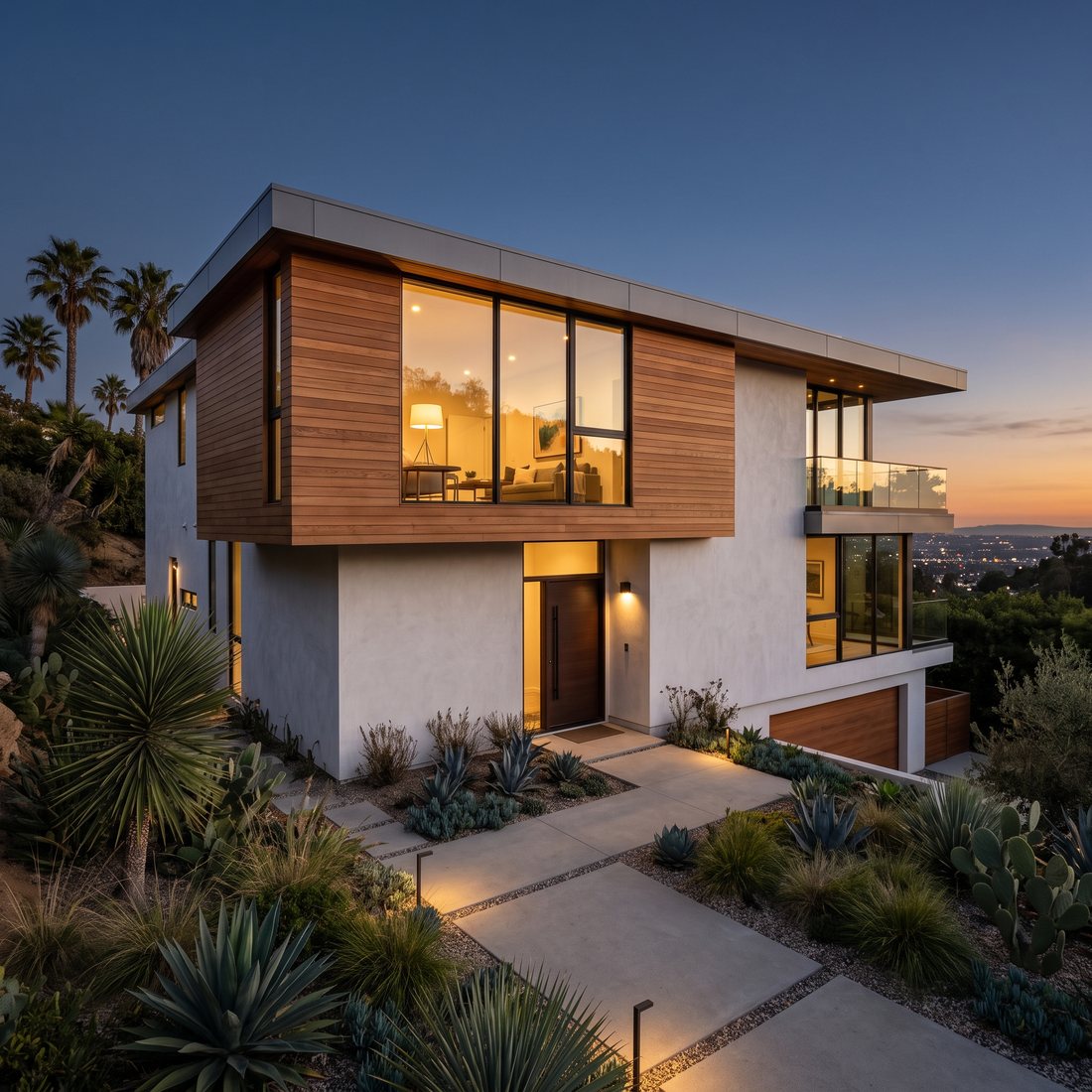
A roof replacement is the remodel nobody chooses for fun — it goes on the list when stains show up on a ceiling or an escrow inspection calls the roof "at end of service life." In Los Angeles the price swings harder than most projects because the housing stock splits across three completely different roof types, each with its own material math.
Here is what the work costs in the LA market and what actually moves the number. These are typical Los Angeles market ranges, not a quote.
The numbers
| Roof type | Typical LA range (installed) | 2,000 sqft home |
|---|---|---|
| Asphalt shingle (architectural) | $8–$12 per sqft | $15,000–$20,000 |
| Concrete or clay tile | $15–$25 per sqft | $30,000–$60,000+ |
| Flat — TPO membrane | $9–$14 per sqft | $12,000–$22,000 |
| Flat — torch-down (mod-bit) | $8–$12 per sqft | $11,000–$19,000 |
| Permit and inspection | $350–$950 | — |
| WUI fire-zone upgrades (Ch. 7A) | +$1–$5 per sqft | — |
One note on measuring: a 2,000-square-foot house does not have a 2,000-square-foot roof. Pitch, overhangs, and waste typically push the roofing area 15–25% above the floor area, which is why bids quote in "squares" (100 sqft of roof surface) and why two homes of the same size price differently.
The three LA roofs
Asphalt shingle covers most postwar tract homes in the Valley and is the cheapest to replace — the $15,000–$20,000 case above.
Tile dominates Spanish-style homes from the 1920s and everything built in the tile-loving 80s and 90s. It costs more per foot, but there is a second question: weight. Concrete tile runs 900+ pounds per square versus about 250 for shingle, so switching a shingle roof to tile needs a structural check of the framing — not just a roofing bid. Going the other direction is easy. Often the tile itself is fine at 40 years old and only the underlayment beneath is gone; a lift-and-relay reuses your tile for less than a full tile replacement.
Flat and low-slope roofs — 1920s Spanish parapet roofs, mid-century modern, and most small multifamily — carry a rule many owners hit for the first time at replacement: under California Title 24, every low-slope reroof statewide must use cool-rated (reflective) material. Steep-slope shingle roofs in most of the city are exempt, but a flat roof cannot legally go back on in plain black. The cool-roof premium is modest and pays itself back in summer cooling — the same logic that drives Title 24 requirements in a remodel.
The fire-zone premium
If your home sits in a mapped Very High Fire Hazard Severity Zone — most of the hillsides from the Verdugos to Mulholland — the reroof must meet Chapter 7A: Class A fire-rated assembly, ember-resistant venting, and detailing that adds $1–$5 per square foot. Check your address on the CAL FIRE hazard map before collecting bids, because a quote written for a flatland house is wrong for a hillside one — one more line in the list of what hillside lots actually cost.
Since the January 2025 fires, the rebuild on the Westside has also pulled roofing crews and materials hard — quoted labor in fire-adjacent areas has run 15–25% above the pre-fire baseline. Bids are volatile; get three.
When the roof joins a bigger project
A roof rarely fails alone. If the house is heading into a whole-home renovation, sequencing the reroof into the project saves real money: scaffolding and site logistics are shared, deck repairs happen while framing is already open, and solar, skylights, and new venting land on the new roof instead of puncturing an old one. And if the reroof is standalone — it is a like-for-like replacement, so it will not raise your property taxes.
Questions
Can I put new shingles over the old ones instead of tearing off?
Sometimes, but usually not more than once. Code caps a roof at two layers of asphalt shingle, so if your roof already has an overlay the next job is a mandatory tear-off. Overlaying saves $1–$2 per square foot today but hides the deck — rotten sheathing stays rotten — and the next crew charges more to remove two layers. On any pre-1980 LA house, tear-off is almost always the better money.
How long does a roof actually last in Los Angeles?
Architectural asphalt shingle runs 20–30 years in the LA climate; concrete and clay tile 50+ years, though the underlayment beneath tile fails at 20–30 and needs a lift-and-relay; TPO and torch-down flat roofs run 15–25 years. UV exposure, not rain, is what ages LA roofs — south-facing slopes go first.
Do I need a permit to replace a roof in LA?
Yes. Reroofing requires a building permit in Los Angeles, Burbank, and Glendale — typically $350–$950 including inspection. The inspector checks nailing, underlayment, and fire rating. Unpermitted reroofs surface in escrow the same way any unpermitted work does, and a like-for-like roof replacement does not trigger a Prop 13 reassessment, so there is no tax reason to skip the permit.
Should I replace the roof before installing solar panels?
If the roof has less than 10 years of life left, yes — always. Removing and re-installing a solar array to reroof later costs $2,000–$6,000 on top of the roof itself. Most solar installers will not warranty their mounts on a roof past its midlife anyway. Reroof first, then mount panels once.