Rebuilding in Altadena After the Eaton Fire: What to Know
Altadena is unincorporated Los Angeles County, so a rebuild goes through LA County Planning, Building and Safety, Fire, and Public Health — not the City of Pasadena and not LADBS. The single decision that shapes everything else is whether your project qualifies as a like-for-like rebuild. In the Eaton Fire area, that means the replacement structure does not increase floor area, size, height, or footprint by more than 10 percent or 200 square feet, whichever is greater. Like-for-like projects are exempt from current Zoning Code requirements and move through a faster review; anything larger falls under the Altadena Community Standards District. Either way, current Building, Fire, and Health and Safety codes apply in full — Chapter 7A and Title 24 cannot be grandfathered. Budget roughly $300 to $400 per square foot for a straightforward rebuild and $450 to $750 for a custom one.
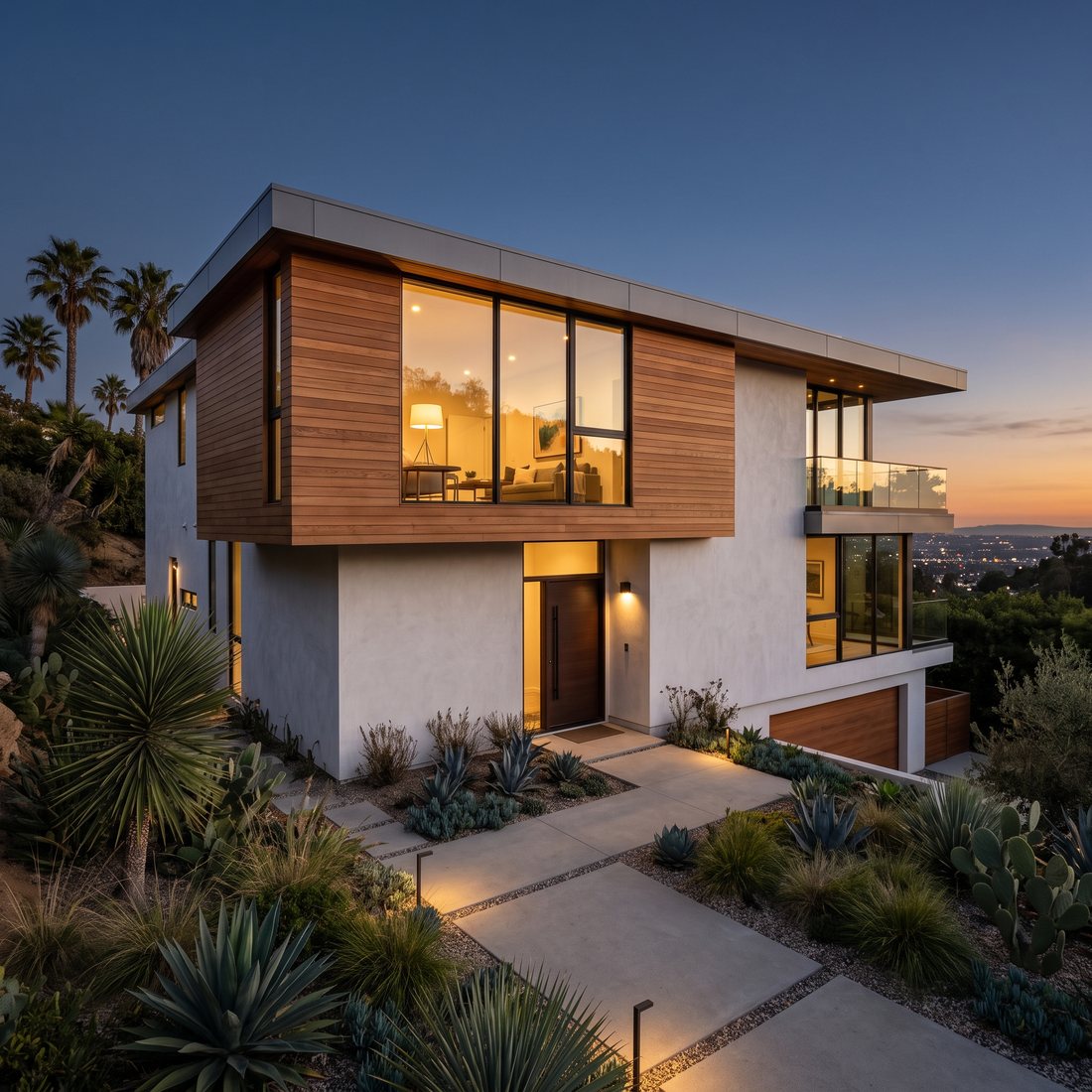
Altadena sits between two cities and belongs to neither. That single administrative fact drives more confusion in the rebuild than any code provision does, and it is where every conversation about a burned lot on Lake, Mariposa, or Fair Oaks should start.
You are in the County, not in a city
Altadena is unincorporated Los Angeles County. Not Pasadena, which begins at the south edge and runs its own Permit Center at 175 N. Garfield. Not the City of Los Angeles, so LADBS has no role at all. Your permits come from LA County Regional Planning, County Building and Safety, County Fire, and County Public Health, and applications are routed through the Altadena One-Stop Permit Center at 464 W. Woodbury Rd, Suite 210 — walk-in weekdays 8:00 a.m. to 4:30 p.m., with rebuild consultation appointments Monday, Wednesday, and Friday mornings.
This matters when you hire. A contractor whose entire permit history is on the Pasadena side of the line knows a different counter, different plan-check reviewers, and a different fee schedule. Ask directly how many County rebuild submittals they have taken through, not how many fire rebuilds in general.
In February 2026 the Board of Supervisors moved to consolidate this further, voting to create a County Disaster Recovery Rebuild Authority — a unified permitting body aligned with the One-Stop Centers, currently staffed as a thirteen-position startup team. The practical effect for a homeowner submitting today is modest, but it signals that the routing will keep changing. Verify the current process with your assigned land use planner rather than with a blog post, including this one.
The like-for-like decision is the whole ballgame
Everything downstream of this fork is different.
Like-for-like means a structure of the same size, in the same location, for the same purpose as what burned. In the Eaton Fire area specifically, LA County permits modifications that do not increase floor area, size, height, or footprint by more than 10 percent or 200 square feet, whichever is greater. That 200-square-foot floor is an Eaton-area concession; the Palisades rule is a flat 10 percent. You may also build smaller, or keep the same envelope and completely redraw the interior, and still qualify.
The reward is significant: like-for-like rebuilds do not have to comply with current Zoning Code requirements. If the house that burned was closer to a property line than today's rules allow, or taller, or covered more of the lot, that non-conformity comes back with it.
Not like-for-like means you are building under today's zoning, and in Altadena that means the Altadena Community Standards District, adopted in 1999 to keep new large houses in scale with their neighbors. The CSD governs setbacks, height, and lot coverage — side yards at 10 percent of average lot width with a 5-foot minimum for interior and corner side yards and 10 feet at a reverse corner, and rear yards of 35 feet on lots of 20,000 square feet or more. One notable carve-out for fire rebuilds: the CSD front-yard requirement is set aside, and every non-like-for-like rebuild uses a flat 20-foot front setback instead.
So the question "should we add 400 square feet while we're at it?" is not a design question. It is a decision to leave one permitting track for another, and it deserves to be priced both ways before anyone draws anything.
What is never grandfathered
The like-for-like exemption covers zoning. It does not cover Building, Fire, or Health and Safety codes, and those are where the real cost of a 2026 rebuild lives compared with the house that stood there.
Chapter 7A — the wildland-urban interface construction standard — governs ember-resistant venting at every opening, enclosed eaves and soffits, ignition-resistant siding and decking, and a Class A roof assembly. On roofing alone this runs $1 to $5 per square foot above a standard reroof.
Title 24 applies at full current stringency, which as of January 1, 2026 includes tighter fenestration performance — the same numbers that now govern window replacement across Los Angeles. Windows are one of the most common places a rebuild budget written in 2025 comes up short.
One thing worth not budgeting for yet: statewide Zone 0, the five-foot ember-resistant zone around a structure. It has been widely discussed as if it were law. As of the Board of Forestry's April 2026 draft it is still in rulemaking, framed around education and phased implementation rather than immediate enforcement, and there is no statewide effective date for new construction. Design for it if you want the resilience — it is cheap insurance and good practice — but do not let anyone bill you for compliance with a regulation that has not been adopted.
The money, honestly
Typical Altadena rebuild pricing in 2026, as ranges rather than quotes:
| Track | Cost per square foot | 1,800 sqft house |
|---|---|---|
| Basic reconstruction | $300–$400 | $540K–$720K |
| Custom rebuild | $450–$750 | $810K–$1.35M |
| High-end / difficult site | $500–$900 | $900K–$1.6M |
Typical Los Angeles market ranges, not a quote.
Against that sits the insurance problem, which is the defining feature of this rebuild. Reporting on one major carrier's Altadena policyholders found average dwelling coverage of about $628,000 against field-adjuster rebuild estimates near $867,000 — roughly 41 percent short. Surveys of Eaton-area homeowners found about one in five expecting insurance to cover half or less of their rebuild cost. If that describes you, the like-for-like path and a smaller footprint are not a compromise; they are the strategy.
Two County programs cut real cost. Pre-approved standard plans from LA County Planning have already cleared zoning, building, and wildfire code review, which collapses plan check; Planning charges no fee for initial zoning review, with Building and Safety plan check priced off square footage and valuation. Separately, the nonprofit Foothill Catalog has architect-designed foothill-appropriate plans in use by roughly a hundred Altadena and Pasadena families, with demonstration homes opening this fall. For Regional Planning's own fee, a like-for-like rebuild runs about $1,429 versus $1,623 for a non-like-for-like project that needs no public hearing — a small number, but a clean illustration of which track is simpler.
Where the schedule actually goes
Debris removal comes first: EPA hazardous-materials clearance, then Army Corps or private fire debris removal. Applications can be submitted before that is finished, but no building permit issues until the lot is cleared.
Plan approval has been averaging roughly five months for a standard rebuild — genuinely faster than the County's pre-fire pace. The permitting picture at the start of 2026: more than 3,300 rebuild applications received across the affected County areas and more than 2,300 residential permits issued, with around 1,400 Altadena homes under construction and the first several dozen finished. Set against nearly 13,000 homes lost across both January 2025 fires, fewer than one in five destroyed homes had been permitted.
That backlog is also a labor market. Framing, concrete, roofing, and electrical crews across the eastern San Gabriel Valley are absorbed by rebuild work, which firms up pricing and stretches schedules for everyone in the area — including homeowners doing ordinary remodels miles from the burn scar.
Practical order of operations
- Confirm your parcel's debris clearance status before anything else.
- Get the previous structure's dimensions documented — old permits, assessor records, surveys, photographs. Like-for-like is proved with paper.
- Price the rebuild both ways, at the old footprint and at the size you actually want, including the zoning review the larger version triggers.
- Look at pre-approved and catalog plans before commissioning a custom design, especially if the insurance gap is real.
- Verify the license, bond, and workers' compensation of anyone bidding — check the CSLB record yourself. Disaster areas attract people who should not be on your lot, and California's deposit limit of $1,000 or 10 percent of the contract, whichever is less, applies here exactly as everywhere else.
Dn Builders Group Inc Services is a licensed general contractor in Burbank (CA Lic. #1139710) working across the Greater Los Angeles area, including custom home builds. If you are weighing a rebuild in Altadena and want the two tracks priced side by side before you commit to a design, that conversation is worth having early — the footprint decision is the one that is hardest to undo.
Questions
Does Altadena permit through Pasadena?
No. Altadena is an unincorporated community, so all permits come from Los Angeles County — Regional Planning, Building and Safety, Fire, and Public Health, with applications routed through the Altadena One-Stop Permit Center at 464 W. Woodbury Rd, Suite 210. The City of Pasadena runs a completely separate Permit Center for its own residents. The two are neighbors with different codes, different fee schedules, and different staff, and a contractor whose rebuild experience is all on the Pasadena side is starting over at the County counter.
What counts as a like-for-like rebuild in the Eaton Fire area?
A replacement structure of the same size, in the same location, for the same purpose as what was lost. LA County allows modifications that do not increase floor area, size, height, or building footprint by more than 10 percent or 200 square feet, whichever is greater — the 200-square-foot allowance is specific to the Eaton area and more generous than the flat 10 percent used in the Palisades. You may also make it smaller or change the floor plan entirely and still qualify. Like-for-like rebuilds do not have to meet current Zoning Code standards, which is the real prize.
What does it cost to rebuild a house in Altadena in 2026?
Straightforward reconstruction generally runs $300 to $400 per square foot, custom rebuilds $450 to $750, and high-end finishes push past $500 and occasionally to $900 where slope, access, or design complexity is involved. A 1,800-square-foot house therefore lands somewhere between roughly $540,000 and $1.35 million depending on which of those tracks you are on. These are typical Los Angeles market ranges, not a quote. Site conditions, foundation work, utility reconnection, and the state of the lot move the number more than finish selections do.
Do I have to meet Chapter 7A even on a like-for-like rebuild?
Yes. The like-for-like path exempts you from current Zoning Code requirements only. Building, Fire, and Health and Safety codes apply to every rebuild, which means Chapter 7A wildland-urban interface construction — ember-resistant venting, enclosed eaves and soffits, ignition-resistant exterior materials, Class A roof assembly — plus current Title 24 energy compliance. Nothing about the previous house is grandfathered into the new one.
How long is the permit taking?
Plan approval for a standard Altadena rebuild has been averaging around five months, which is faster than the pre-fire County norm because of the streamlined rebuild pathways. Debris removal must be finished before a building permit issues, though applications are accepted before that. A pre-approved standard plan shortens the review further, because the design has already cleared zoning and building review at the County level.