Remodeling in Pasadena: What to Know
Pasadena is not Los Angeles County for permitting purposes — it runs its own Permit Center at 175 N. Garfield Ave, with its own plan check, its own fee schedule, and a Design and Historic Preservation counter that Los Angeles does not have an equivalent of. If your house sits in one of Pasadena's landmark districts, exterior work visible from the street needs a Certificate of Appropriateness before a building permit is issued. And since the January 2025 Eaton Fire, contractor capacity across the eastern San Gabriel Valley has been absorbed by rebuild work, which shows up in both scheduling and pricing.
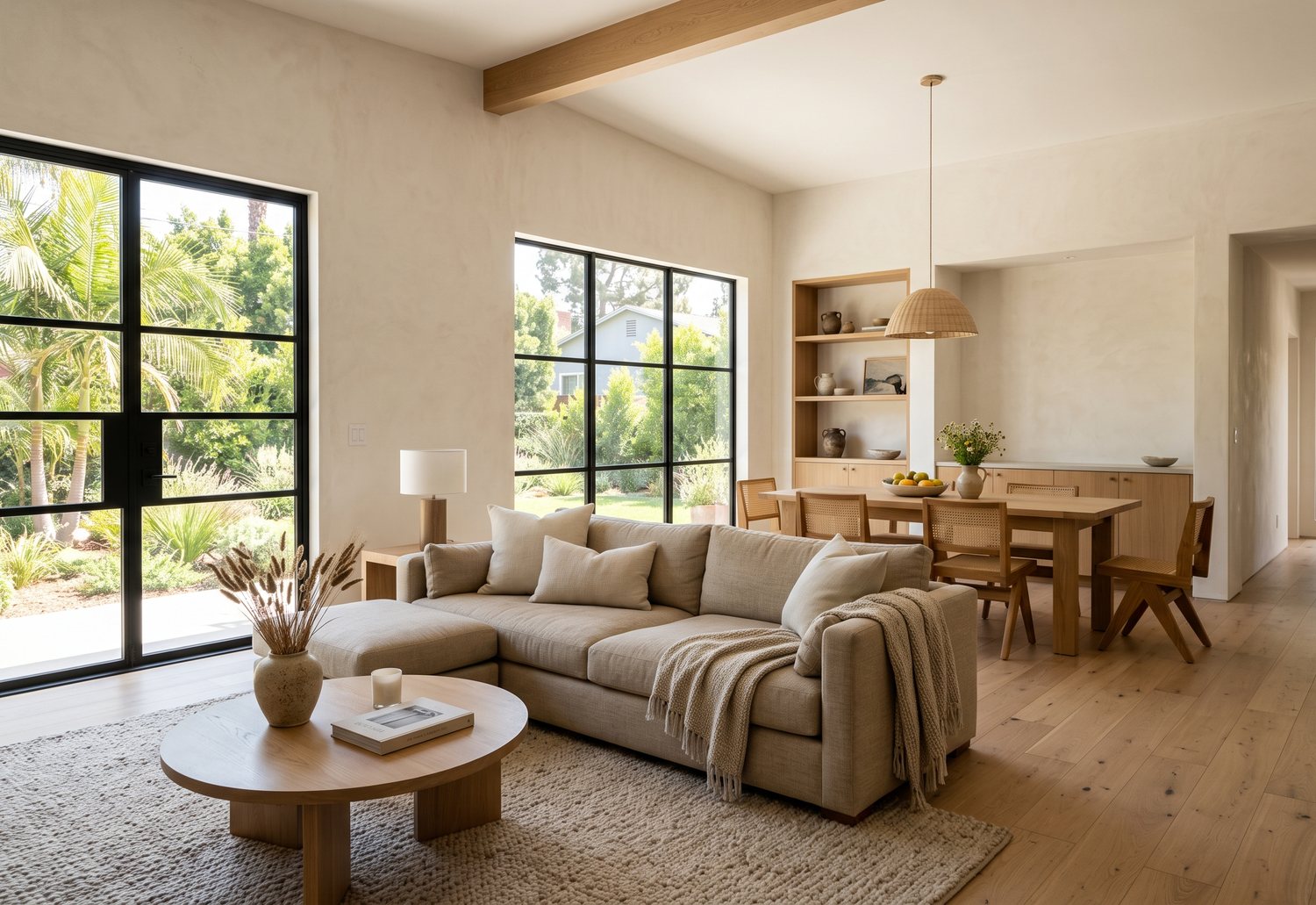
Pasadena confuses people who have remodeled elsewhere in Los Angeles, and it confuses them at the counter rather than in the field. The houses are not fundamentally harder to work on. The approval process is a different animal, and the current market conditions are unlike anywhere else in the region.
It is its own city, and that is the first thing
Pasadena is not under LADBS and not under LA County Building and Safety. It runs its own Planning and Community Development Department out of the Permit Center at 175 N. Garfield Ave, with its own plan check staff, its own fee schedule, and its own inspection calendar.
That matters practically. A contractor who has spent a decade at the LADBS Van Nuys counter knows exactly how long a Valley plan check takes and who to call when it stalls; none of that transfers. The difference is the same category of difference we mapped out in permits in Glendale vs Burbank vs Los Angeles — three neighbors, three completely separate processes. Pasadena is a fourth.
The one department Pasadena has that its neighbors mostly do not is Design and Historic Preservation, and that is where the real Pasadena-specific work happens.
The landmark districts
Pasadena has designated landmark districts at a density unusual for a California city of its size — Bungalow Heaven is the well-known one, but there are roughly two dozen others, plus individually designated landmarks scattered across the city. Together they cover a meaningful share of the pre-1940 housing stock.
If your house is inside one, the rule is straightforward and catches people anyway: exterior work visible from the street or alley needs a Certificate of Appropriateness before a building permit will issue. That includes windows, roofing material, porch changes, front-facing additions, and often fencing and driveways. It generally does not include kitchens, bathrooms, or anything behind the house that the public cannot see.
The application goes to the Design and Historic Preservation counter with drawings, photographs, and material samples. This is a real review, not a rubber stamp — Bungalow Heaven has its own Conservation Plan with design standards the reviewer works from. The single most common expensive surprise is windows: a homeowner buys vinyl retrofits, discovers the district requires wood with matching profiles and divided lights, and the per-window number triples. Price the window replacement against the district standard, not against the big-box quote.
None of this makes a landmark district a bad place to own a house. The design review is precisely what protects the value people pay a premium for. It just has to be in the schedule and in the budget from day one, not discovered at submittal.
What is behind the walls of a Pasadena Craftsman
The Craftsman bungalows that define Pasadena were built roughly 1905–1925, which puts them a full generation older than the postwar Valley tracts. The systems reflect it:
- Knob-and-tube wiring, still live in a surprising number of untouched houses, and typically a 60 or 100-amp service. Anything modern — EV charger, induction range, heat pump — starts with a panel upgrade.
- Galvanized supply piping, often original, closing up from the inside. On a house this age a repipe is usually a when, not an if.
- Clay sewer laterals with a joint every few feet under a century of mature landscaping. Camera the line before you plan anything.
- Raised foundations with unbolted mudsills and unbraced cripple walls — the classic soft-story failure mode in an earthquake, and the retrofit is one of the highest-value-per-dollar items in the entire house. The mechanics are the same ones we covered for earthquake retrofits in Burbank and the Valley.
- True-dimension lumber, meaning a 2x4 is actually two inches by four inches. Good news structurally, annoying when new framing has to tie into old.
The compensation for all of that is real craftsmanship — quarter-sawn oak, built-in cabinetry, box beams, original tile. Replacing it costs multiples of restoring it, and buyers in Pasadena can tell the difference. On these houses, budget systems aggressively and finishes conservatively.
The Eaton Fire is still shaping the market
The January 2025 Eaton Fire burned through Altadena and the northern edge of Pasadena, and eighteen months later the rebuild is the dominant force in the local construction market.
The scale is hard to overstate. Altadena logged over $2.78 billion in permitted job value in the thirteen months after the fire, roughly eighteen times the prior year's $156 million, and the broader Eaton corridor has crossed $3.15 billion. Custom rebuilds are running $450–$750 per square foot; more basic reconstruction lands closer to $300–$400. Yet fewer than one in five destroyed homes has a rebuilding permit in hand, which means the demand ahead is larger than the demand already absorbed.
For a homeowner planning an ordinary Pasadena remodel, three consequences follow. Crew availability is genuinely tight — good subcontractors are booked out further than they were two years ago, and the ones who are immediately available deserve a second look. Pricing has firmed, particularly for framing, roofing, and electrical. And if your property is in or near the burn area or a mapped fire hazard zone, Chapter 7A requirements apply to exterior work: Class A roofing, ember-resistant vents, tempered glazing.
The practical advice is unglamorous. Start earlier than you think you need to, lock your contractor and your schedule before you finalize finishes, and treat a bid that comes back suspiciously fast and suspiciously cheap as information rather than a bargain.
The short version
Pasadena rewards planning. Confirm whether your address is in a landmark district before you design anything exterior. Budget the historic review as its own phase ahead of plan check. Assume the systems in a pre-1930 house need replacing and price them first. And build a schedule that accounts for a regional construction market still absorbing a rebuild of historic scale. Do those four things and Pasadena is one of the most satisfying places in Los Angeles County to renovate a house — which is roughly what a whole-home renovation here is: as much restoration as construction.
Questions
Which building department covers Pasadena?
The City of Pasadena runs its own Planning and Community Development Department and Permit Center at 175 N. Garfield Ave. Nothing goes through LADBS or LA County. That distinction matters more than it sounds — Pasadena's plan check queue, fee schedule, and inspection scheduling are entirely independent of the city next door, and a contractor whose experience is all LADBS work will be learning the counter on your project.
What is a Certificate of Appropriateness and do I need one?
It is Pasadena's design review approval for work on historic properties. If your home is in a designated landmark district — Bungalow Heaven, Garfield Heights, and roughly two dozen others — or is individually designated, exterior changes visible from the public right of way need a Certificate of Appropriateness from the Design and Historic Preservation counter before the building permit issues. Interior work and changes not visible from the street generally do not. Applications need drawings, photographs, and often material samples, so build the review into your schedule rather than discovering it at submittal.
How long does Pasadena plan check take?
For a standard-plan ADU, budget roughly three to four weeks for initial review and about two weeks per resubmittal. Larger remodels and additions vary with completeness of the drawings. One useful change: under SB 543, effective January 1, 2026, a ministerial ADU review is deemed approved if the city fails to act within 60 days. If your project needs historic review, add that timeline in front of plan check rather than assuming they run in parallel.
Is it more expensive to remodel in Pasadena than the Valley?
Right now, yes, for two reasons that have nothing to do with the houses. Contractor and subcontractor capacity across the eastern San Gabriel Valley has been pulled into Eaton Fire rebuild work — over $2.78 billion in permitted job value in Altadena alone in the thirteen months after the fires, against $156 million the prior year. That tightens crew availability and firms up pricing. Second, Pasadena's housing stock skews older and more architecturally specific, so matching existing detail costs more than replacing it.