How Much Does Chapter 7A Fire Hardening Cost in Los Angeles?
Chapter 7A wildfire-resistant construction adds about $30,000 to a typical 2,000 square foot Los Angeles rebuild — roughly $15 per square foot, or 2 to 8 percent of hard construction cost. Smaller and simpler homes land near $13,000; large homes with long wall runs, many vent openings and heavy glazing run $50,000 to $80,000 or more. Some LA builders quote the premium as 12 to 18 percent of the build, but that figure usually includes items Chapter 7A does not actually require. These are typical Los Angeles market ranges, not a quote.
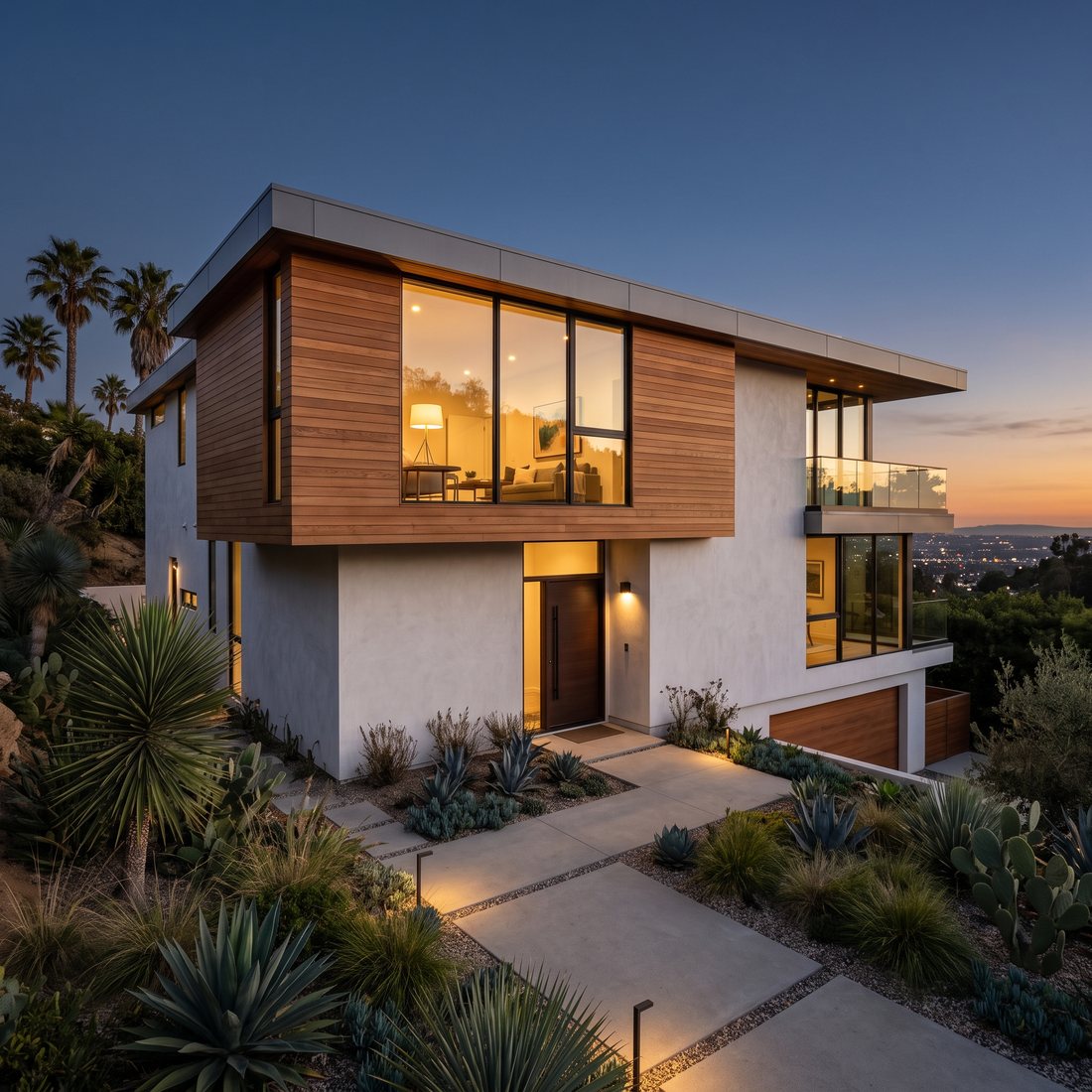
Chapter 7A of the California Building Code is the wildfire chapter — the ignition-resistant standards for roofs, eaves, vents, walls, windows and decks in wildfire-prone areas. Since the January 2025 fires it has become the single most asked-about line in Los Angeles construction budgets, and the answers circulating range from "a rounding error" to "18 percent of your build." Both are wrong in different directions.
Here is what it actually costs, what triggers it, and which items in a typical LA bid are labeled Chapter 7A but are not.
The number
For a baseline code-compliant home, Chapter 7A adds roughly $15 per square foot — about $30,000 on a 2,000 square foot house. Smaller and simpler homes come in lower: one analysis of a 1,750 square foot Altadena-style rebuild put the delta near $13,000, or 2 to 3 percent of total construction cost. Independent cost research using RSMeans assemblies puts wildfire-resistant construction at 2 to 8 percent of the price of a new home for baseline compliance, rising to 4 to 13 percent for a home built well beyond code.
Large, articulated, glass-heavy houses are the outliers. Once you are past roughly 3,000 square feet with a complex roof and a lot of openings, $50,000 to $80,000 or more is realistic.
| Component | Typical LA premium over standard |
|---|---|
| Class A roof covering (upgrade from non-rated) | $2,000–$4,000 |
| Ember-resistant vents, whole house | $3,000–$8,000 |
| Per-vent upcharge (a $40 soffit vent becomes ~$120) | $50–$150 each |
| Ignition-resistant siding or stucco, full exterior | $8,000–$18,000 |
| Fire-rated / tempered glazing, per opening | $200–$300 |
| Noncombustible decking and enclosed under-deck | $3,000–$12,000 |
| Enclosed soffit in place of open eaves | $2,000–$6,000 |
| Typical whole-house total | $13,000–$80,000 |
Typical Los Angeles market ranges, not a quote.
For context, ground-up construction in the LA fire-affected areas is running roughly $450–$750 per square foot for custom rebuilds and $550–$950 in Pacific Palisades. Against $450 per square foot, a $15 per square foot hardening premium is about 3 percent of the job. That is the honest framing, and it is very different from the 12 to 18 percent figure some rebuild guides quote.
Why the quoted premium is usually inflated
Three things get folded into "Chapter 7A cost" that do not belong there.
Fire sprinklers. Every new one- and two-family dwelling in California has required an automatic residential sprinkler system since January 1, 2011, under California Residential Code section R313.2. Statewide. Fire zone or not. A $5,000 to $15,000 sprinkler package on your rebuild is a real cost, but it is not a fire-zone cost, and putting it under a Chapter 7A heading makes building in the hills look far more expensive than it is.
Current-code catch-up. A house built in 1958 was not insulated, glazed, wired or braced to 2026 standards. Rebuilding it means Title 24 envelope and fenestration values that tightened again on January 1, 2026, current seismic detailing, and modern electrical service. Those costs are triggered by building new, not by the fire map. If you want the fenestration side of that, we broke it out in window replacement cost in Los Angeles.
Design ambition. Standing-seam metal, barrel tile, full noncombustible landscaping and metal-framed decks are all excellent wildfire choices, and none of them are the minimum. The research that produced the 2 to 8 percent figure separates baseline Chapter 7A from an optimum build, and the gap between them was $27,100 in Southern California. That is a choice, not a code requirement.
What Chapter 7A actually requires
The chapter works assembly by assembly, and each one has a cheap compliant option and an expensive one.
Roof. Class A covering, no exceptions. In LA that usually means asphalt fiberglass composition shingles at the low end or clay tile at the high end. The vulnerable detail is the roof edge — gutters, drip edge and roof-to-wall intersections where embers collect. Metal gutters with guards and a metal drip edge cost more than vinyl and are worth it. Roofing costs and the tile-weight structural question are covered in roof replacement cost in Los Angeles.
Eaves and vents. Open eaves trap heat and let embers into the rafter bays. An enclosed soffit — fiber cement in most of the state, three-coat stucco in Southern California — plus listed ember- and flame-resistant strip vents closes the most common failure path. A newly built 2,000 square foot home typically has 30 to 60 vent openings across attic, soffit, foundation and eaves. That count, not the unit price, is what drives the vent line.
Exterior walls. Stucco is the quiet winner in LA — it is what most of the existing stock already uses, it is noncombustible, and it carries almost no Chapter 7A premium. Fiber cement siding and trim also comply. Wood and wood-composite siding is where the cost appears.
Windows and doors. Dual-pane with at least one tempered pane is the practical minimum in the zone. Metal pedestrian and garage doors frequently cost less than the wood versions they replace, which is one of the few places the code saves you money.
Decks. Noncombustible or approved fire-resistant walking surfaces, and the under-deck area matters as much as the top. Enclosing beneath the deck with 1/8-inch metal mesh is inexpensive and removes a major ember trap.
The trigger that surprises people
Chapter 7A is not only a rebuild issue. Inside the wildland-urban interface, additions and alterations are generally addressed as new construction, and the threshold jurisdictions commonly apply is replacing more than 50 percent of the exterior wall or roof area. Practical consequences:
- Any reroof or substantial roof replacement has to be Class A.
- Re-siding most of a house pulls the wall assembly up to current standards.
- Creating a new window opening, or altering an existing one, in a single-family home built before July 1, 2008 is treated as an alteration, and the new opening has to comply.
It is not a retrofit mandate. Nobody is coming to make you replace working vents. But the moment a project crosses those lines, the compliant assembly is the only one that gets a permit final — which is why scope creep on a hillside remodel is more expensive here than anywhere else in the city. The other hillside cost drivers are collected in hidden costs of hillside lots in Los Angeles.
The map moved in 2025
The reason this now affects homeowners who never saw a flame: CAL FIRE issued 2025 recommended Fire Hazard Severity Zone maps for Southern California on March 24, 2025, and the City of Los Angeles saw roughly a seven percent increase in very-high hazard acreage. Cities are required to adopt the recommended maps by ordinance after public hearings, and state law permits a local agency to raise a hazard designation but never to set it below the state's recommendation.
So the practical sequence for anyone planning work in or near the foothills is: confirm the parcel's current zone designation first, then design. Finding out at plan check that your wall and vent assemblies are wrong is a redraw, not a change order.
Zone 0 is still not law
You will hear about Zone 0, the noncombustible five feet immediately around the structure. As of mid-2026 there is no statewide Zone 0 requirement in effect. The Board of Forestry and Fire Protection released a revised draft in April 2026; it remains in rulemaking, leans on education and outreach, and contemplates a phased multi-year implementation. Some local jurisdictions, including the City of San Diego, adopted their own ordinances ahead of the state.
Our advice is unchanged from what we wrote about the Altadena rebuild: build the first five feet noncombustible because the evidence for it is strong and gravel costs less than bark, but do not accept a line item priced as compliance with a regulation that has not been adopted.
What to do with this
- Look up your parcel on the current adopted hazard map before design starts.
- Ask any bidder to show Chapter 7A items as their own subtotal, and check whether sprinklers, Title 24 and current seismic work have been quietly parked inside it.
- Choose stucco walls, an enclosed soffit and a simple roof geometry if budget is tight — those three decisions absorb most of the premium.
- Count your vent openings early. Thirty versus sixty is a several-thousand-dollar swing nobody mentions.
- Treat the noncombustible five feet as cheap insurance, priced as landscaping rather than as code.
Dn Builders Group Inc Services is a licensed general contractor in Burbank (CA Lic. #1139710) working across Greater Los Angeles, including custom home builds in fire-zone parcels. If you want the Chapter 7A premium broken out as its own number before you commit to a set of drawings, that is a conversation worth having at the design stage, when it is still nearly free to change.
Questions
Do I have to build to Chapter 7A if my house did not burn?
Possibly. Chapter 7A applies by map, not by history. It governs new construction in State Responsibility Areas and in Very High Fire Hazard Severity Zones inside city limits. CAL FIRE issued new recommended zone maps for Southern California on March 24, 2025, and the City of Los Angeles saw roughly a seven percent increase in very-high hazard acreage. State law lets a local agency raise a hazard level but never lower one below the state recommendation, so parcels pulled into the zone stay there. Check your parcel against the current adopted map before you design anything.
Does a remodel trigger Chapter 7A, or only a full rebuild?
Remodels can trigger it. Additions and alterations inside the wildland-urban interface are generally treated as new construction for these provisions, and the common threshold jurisdictions apply is replacing more than 50 percent of the exterior wall or roof area. A reroof has to go Class A. Cutting a new window opening, or altering an existing one, in a single-family home built before July 1, 2008 is treated as an alteration and pulls the new opening up to current standards. It is not a blanket retrofit mandate — but whatever you touch has to comply.
Are fire sprinklers part of the Chapter 7A cost?
No, and this is the most common mislabeling in LA bids. Automatic residential fire sprinklers have been required in every newly built one- and two-family dwelling in California since January 1, 2011 under California Residential Code section R313.2, everywhere in the state, fire zone or not. If a proposal shows $5,000 to $15,000 of sprinklers as a Chapter 7A line item, the money is real but the label is wrong — and it inflates the apparent premium of building in a fire zone.
Is the Zone 0 five-foot ember zone required yet?
Not statewide. The Board of Forestry and Fire Protection released a revised draft in April 2026, and it remains in rulemaking with an education-first, phased approach and no statewide effective date. A few local governments, San Diego among them, adopted their own versions ahead of the state. Design the first five feet as noncombustible anyway because it is cheap and it is where homes actually ignite, but do not accept a change order priced as compliance with a rule that has not been adopted.
What is the cheapest way to hit Chapter 7A?
Decide it at the drawing stage, not in the field. Three-coat stucco walls, an enclosed soffit, a simple roof geometry with few valleys and dormers, and a modest number of large window units instead of many small ones will land you compliant with very little premium. The expensive version is a complex roofline, long runs of wood-look siding, dozens of small openings and an open-frame deck — every one of those decisions multiplies a per-item upcharge.