How much square footage can you add to an LA house?
In the City of Los Angeles, how much you can add to a single-family house is capped by the Baseline Mansionization Ordinance, which limits total Residential Floor Area (RFA) on a standard R1 lot to 0.45 of the lot's size — 2,700 square feet on a 6,000-square-foot lot. Subtract your existing house from that ceiling and what is left is roughly what you can add. Garages count too, and the 2017 amendment tightened the exemptions that used to shelter them. Hillside and coastal lots follow different, usually stricter rules, and Burbank and Glendale — just across the city line — set their own limits entirely.
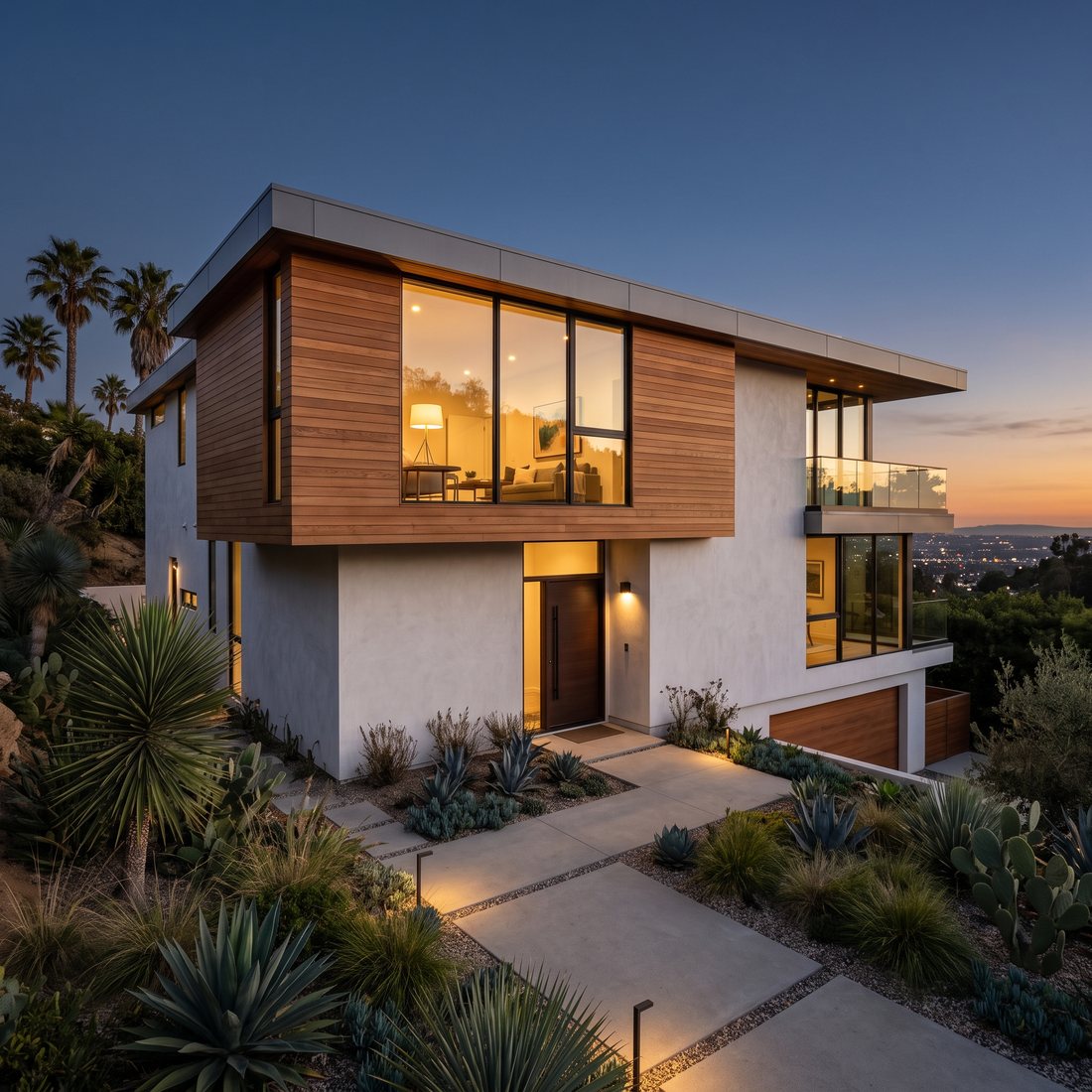
You hire a designer for a room addition, describe the big second story you have been picturing for years, and the first thing they do is pull your lot up on a city map and shake their head. The house you want is bigger than the city will let you build. In the City of Los Angeles, that ceiling has a name — the Baseline Mansionization Ordinance — and it surprises more homeowners than any permit fee ever does.
The rule that decides it
For single-family homes in most of Los Angeles, the mansionization ordinance caps your total Residential Floor Area (RFA) as a ratio of your lot size. On a standard R1 lot the limit is 0.45 — 45% of the lot. The ordinance was first adopted in 2008 and significantly tightened in 2017 (Ordinance No. 184,802), which is the version in force today.
The math is simple and unforgiving. A 6,000-square-foot lot at 0.45 allows 2,700 square feet of house, total. If your existing home is 1,900 square feet, you can add roughly 800 square feet before you hit the cap — not the 1,500 you had in mind. People routinely assume they can double a small house on a normal lot. The ordinance is specifically designed to stop that.
The garage trap
RFA counts every floor of living space, and — this is where people get caught — it counts the garage beyond an exemption. The 2017 amendment tightened those exemptions: it eliminated the old 20% "design bonus" that let you build bigger for certain architectural features, removed the 250-square-foot exemption for covered porches and breezeways, and reduced how much garage area is excluded. A detached garage gets a larger exclusion than an attached one, so that attached two-car garage tucked under the house is quietly using up buildable floor area you were counting on for the addition. Before you design around the garage, confirm the current exemption for your zone with City Planning.
It is not only about floor area
RFA is the limit that shocks people, but it is not the only one. An addition in LA also has to fit inside height limits (generally 33 feet and about two stories in R1), lot-coverage limits, required setbacks, and the encroachment planes that shape where a second story can sit. You can be under your RFA cap and still be blocked by height or by a side-yard plane. A good set of plans is drawn to satisfy all of them at once, which is why a napkin sketch of "just push the back wall out ten feet" so often does not survive plan check.
Hillside and coastal lots are a different book
If your property is in a designated Hillside Area or the Coastal Zone, the mansionization ordinance is not what governs you. Hillside lots fall under the Baseline Hillside Ordinance, which ties your buildable area to slope and access and is usually more restrictive — one of the many reasons hillside projects carry hidden costs nobody budgets for. Coastal parcels add their own layer of review. If ZIMAS flags your lot as Hillside or Coastal, throw out the flat-lot math above and start over.
This is a City of LA rule — the line matters
Here is the local detail an out-of-town calculator will never tell you: the Baseline Mansionization Ordinance is City of Los Angeles only. Burbank and Glendale are their own cities with their own zoning codes, their own floor-area formulas, and their own height rules. A 6,000-square-foot lot in Sun Valley (City of LA) and an identical lot a few blocks away in Burbank can legally support different-sized houses, reviewed by different building departments, under different numbers. We see this constantly across the Burbank–Glendale–LA border, and it is the same reason permits differ so much between those three cities. Whoever tells you "the limit in LA is X" has to know which LA they mean.
How to find your real number
Do not guess, and do not trust a general article — including this one — for your specific lot. Pull your property on ZIMAS, the city's Zoning Information Map Access System. It lists your zone, your exact lot area, and whether you are flagged Hillside or Coastal. Multiply lot area by your zone's ratio, subtract your existing floor area, and you have a rough buildable ceiling. Then have a designer run the real RFA calculation — with garage and exemption details — before you fall in love with a floor plan. Finding out your addition is 400 square feet too big after you have paid for drawings is an expensive way to learn the ordinance.
The workaround worth knowing
Because the cap is so tight, many LA homeowners who want more space add an ADU instead of a room addition. Under California's ADU law, an accessory dwelling unit is generally treated separately from your home's RFA — it does not eat your mansionization ceiling the way a bedroom addition does. That is a large part of why ADUs took off exactly as the mansionization rules tightened. If a straight addition runs into the cap, an ADU or home addition may get you the square footage the ordinance otherwise denies — and if you are weighing up instead of out, our post on second-story addition costs is the next thing to read.
Dn Builders Group Inc Services is a licensed, bonded general contractor based in Burbank (CA Lic. #1139710). Zoning rules, floor-area ratios, and exemptions change and vary by zone and parcel — confirm your lot's specifics on ZIMAS and with LA City Planning (or your city's planning department) before designing. This is general information, not zoning or legal advice.
Questions
What is RFA in Los Angeles?
RFA stands for Residential Floor Area — the city's measure of the buildable floor area on a single-family lot. In most R1 zones the Baseline Mansionization Ordinance caps it at 0.45 of the lot size, so a 6,000-square-foot lot allows about 2,700 square feet of house. It is the number that decides how big an addition can be, and it is worth confirming on ZIMAS before you design anything.
Does a garage count against how much I can build?
Partly. The 2017 mansionization amendment tightened the old garage exemptions — a detached garage gets a larger exclusion than an attached one, and the generous 400-square-foot allowance many homeowners remember was reduced. The practical result is that an attached garage now eats into your buildable floor area more than it used to. Confirm the current exemption with LA City Planning for your specific zone.
Do these limits apply in Burbank and Glendale?
No. The Baseline Mansionization Ordinance is a City of Los Angeles rule. Burbank and Glendale are separate cities with their own zoning codes and their own floor-area and height limits, so the same lot size can allow a different size house depending on which side of the line it sits on. Always check the rules for the city that actually issues your permit.