Remodeling a 1920s Spanish Bungalow in LA: What to Know
A 1920s Spanish bungalow in Los Angeles almost always needs its systems replaced before anything cosmetic — knob-and-tube wiring (a full rewire with a 200-amp panel runs $8,000–$20,000), original galvanized supply pipes, a clay sewer lateral, and an unbolted foundation. Budget the invisible work first; the arches and plaster are the easy part. If the house sits in one of LA's 30-plus Historic Preservation Overlay Zones, exterior changes also go through HPOZ review. These are typical Los Angeles market ranges, not a quote.
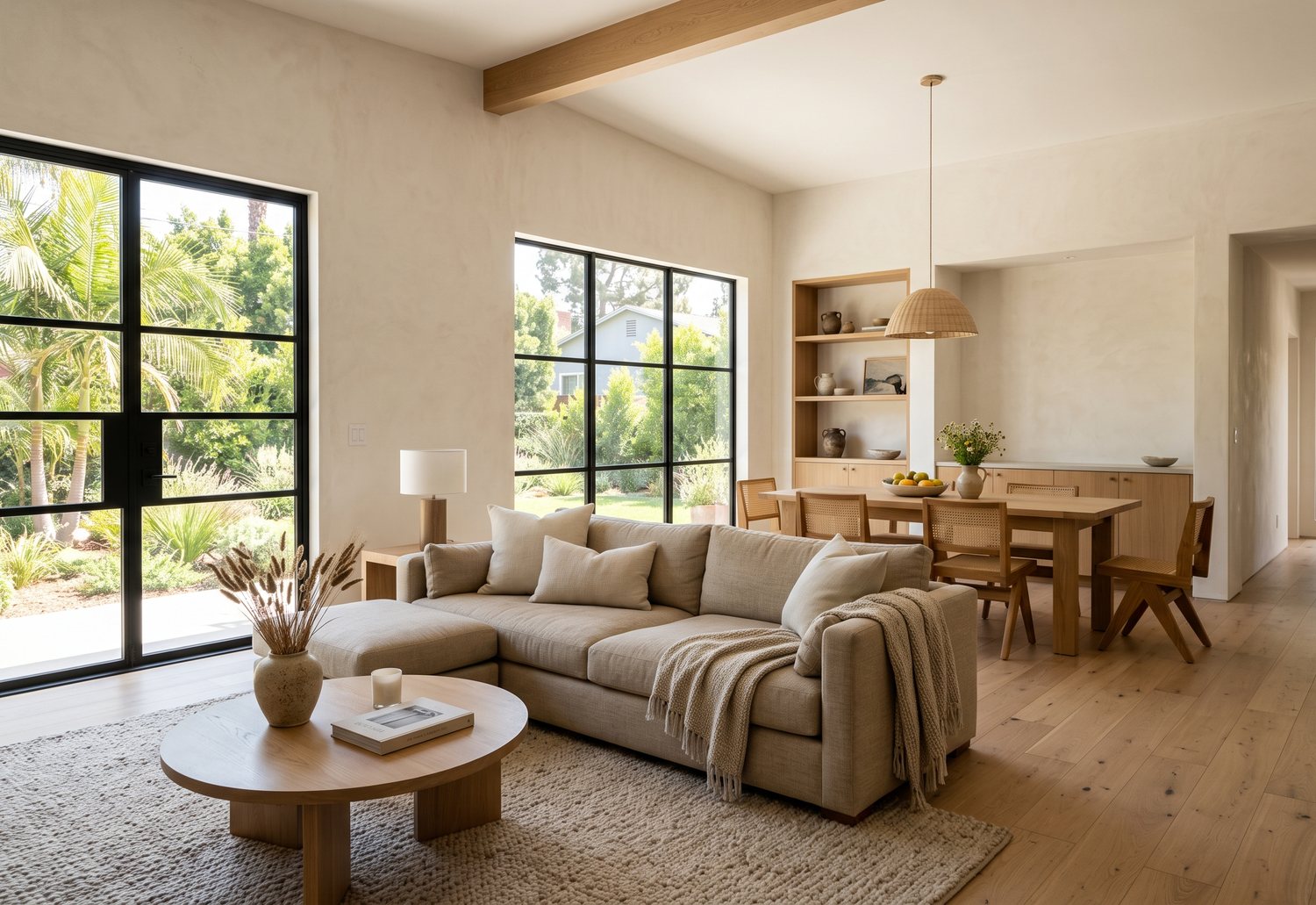
The Spanish Colonial Revival bungalow is the house Los Angeles is famous for — white stucco, red clay tile, arched doorways, built by the thousands in the 1920s boom that filled Los Feliz, Highland Park, Eagle Rock, Leimert Park, Glendale, and Burbank's Magnolia Park. A century later these are some of the most loved houses in the city, and some of the most misunderstood at remodel time.
We wrote about what's behind the walls of 1950s Valley homes; a 1920s house is a different animal — older systems, better bones, and a preservation layer the postwar tracts don't have.
The systems: all four, all original, all due
Wiring. If the house hasn't been rewired, it runs on knob-and-tube — ungrounded circuits on ceramic insulators, designed for a house with a radio and an icebox. The 2026 problem is not just capacity: major California insurers have moved toward refusing to write coverage on active knob-and-tube, which turns the rewire into a condition of ownership, not a preference. A full rewire with a 200-amp panel runs $8,000–$20,000 depending on size and access, and it is the reason to open walls once and do everything behind them in one pass — the same logic as our electrical panel guide for LA, Burbank, and Glendale.
Supply plumbing. Original galvanized steel pipes rust shut from the inside — low pressure and rusty water long before a visible leak. A whole-house repipe in PEX or copper typically runs $6,000–$16,000 in LA.
The sewer. The lateral to the street is vitrified clay, laid in short sections with a joint every few feet, under trees that have had a hundred years to find them. Budget a camera inspection before the remodel; sewer lateral replacement is a $4,000–$15,000 project you want folded into the job, not discovered after the new landscaping goes in.
The foundation. A 1920s perimeter foundation predates every seismic code and is almost never bolted to the house above it. Bolting and cripple-wall bracing runs $3,500–$10,000, state Earthquake Brace + Bolt grants cover up to $3,000 of it, and the retrofit doesn't raise your property taxes. Some 1920s concrete was also mixed on site with unwashed sand — if it crumbles at a screwdriver's touch, get a foundation contractor's eyes on it early.
The good news: the bones
There is a reason these houses survived a century of earthquakes. The framing is old-growth redwood and Douglas fir — dense, straight, naturally termite- and rot-resistant lumber you cannot buy today. Lath-and-plaster walls are quieter and more solid than drywall. The floor plans are small by modern standards, but the ceiling heights, window proportions, and archways are exactly what buyers pay a premium for. A good remodel of a Spanish bungalow replaces every system and touches the character as little as possible.
The preservation layer
Many of LA's Spanish-bungalow neighborhoods sit inside Historic Preservation Overlay Zones — the city has more than 30, and they were drawn around precisely this housing stock. Inside one, exterior changes visible from the street (windows, stucco texture, roof tile, front additions) go through HPOZ review before LADBS issues permits. That mostly rules out vinyl replacement windows and front-facing pop-outs — and it is also why these blocks have kept the character that makes them valuable. Check your address on ZIMAS before designing. Owners of designated historic homes can also look at the Mills Act, a state program that trades a preservation commitment for a meaningful property-tax reduction.
Two more pre-1978 rules apply everywhere, HPOZ or not: lead-safe work practices under the EPA RRP rule, and asbestos testing before demolition — details in the FAQ below.
The right order
Systems first, character last. Camera the sewer, test for lead and asbestos, then open the walls once: rewire, repipe, bolt the foundation, insulate, close, and only then start the kitchen. It is the same sequencing discipline as any whole-home renovation, applied to a house that has earned a little extra care. The bungalow made it a hundred years; remodeled in the right order, it is good for a hundred more.
Questions
Why won't my insurance company cover a house with knob-and-tube wiring?
Active knob-and-tube circuits are close to a century old, have no ground wire, and their insulation gets brittle — and major California carriers have been declining to bind or renew coverage on homes that still run on them. That has turned rewiring from a someday upgrade into a transaction blocker: buyers discover it in escrow when the insurance quote comes back. A full rewire with a 200-amp panel typically runs $8,000–$20,000 in LA, and it is the one project to finish before any walls get closed up.
What is an HPOZ and how do I know if my house is in one?
A Historic Preservation Overlay Zone is the City of LA's historic-district designation — there are more than 30, and many cover exactly the 1920s neighborhoods where Spanish bungalows cluster. Inside an HPOZ, exterior work visible from the street goes through a preservation review before permits issue. Check your address on ZIMAS, the city's zoning map, before planning window or facade changes. Interior remodels are generally not restricted.
Are old plaster walls worth keeping?
Often yes. Original lath-and-plaster is thicker and quieter than drywall and part of the character buyers pay for in these houses. The catch is that opening plaster costs more than opening drywall, and patching it well is a trade skill. The practical approach on a big remodel is to open what the rewire and repipe require, patch in kind where it shows, and use the opportunity to add insulation — 1920s exterior walls have none.
Do 1920s homes have lead paint or asbestos?
Assume both until tested. Lead paint was standard until well after the 1920s, so any renovation that disturbs painted surfaces in a pre-1978 home falls under the EPA's RRP rule — the contractor must be a certified firm using lead-safe practices. Asbestos shows up in later additions to these houses: 1940s–70s ducting, floor tile, and stucco patches. Testing is a few hundred dollars and settles the abatement question before demolition, not during.