ADU vs JADU in California: what's the difference?
A JADU (junior ADU) is capped at 500 square feet and must be carved out of the existing walls of a single-family home; a standard ADU can be up to 1,200 square feet and can be a fully detached, standalone building. That size difference drives everything else. A JADU shares the main home's utilities, needs only an "efficiency" kitchen, and may share a bathroom — so it typically costs $40,000–$100,000. A standard detached ADU has its own full kitchen, bath, and utility connections and runs $200,000–$400,000 new, or $100,000–$200,000 as a garage conversion. Both are legal on the same single-family lot — California lets you add one JADU and one detached ADU alongside the main house.
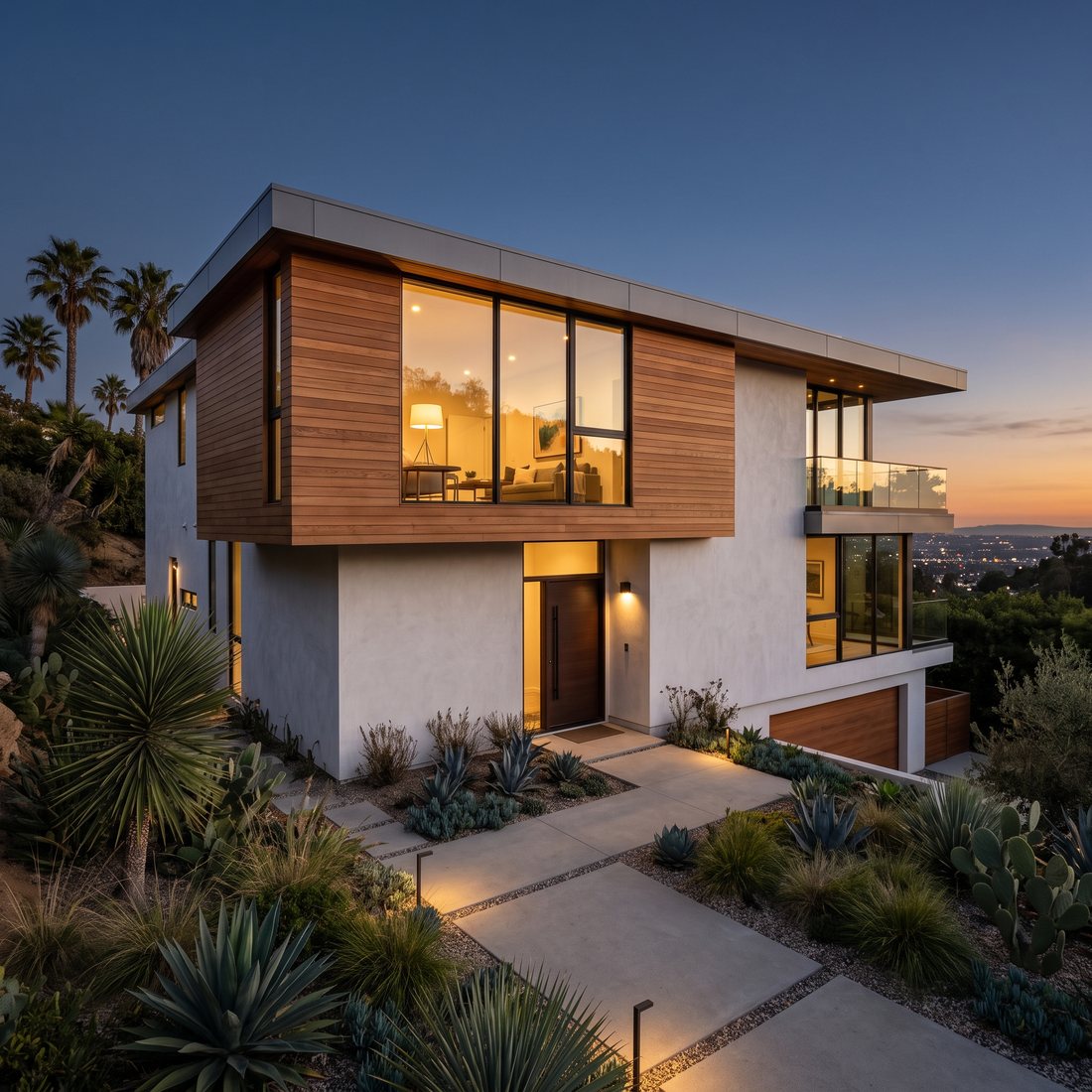
The words sound almost the same, and people use them interchangeably, but an ADU and a JADU are two different things under California law — with different size caps, different costs, and different rules about whether you have to live on site. Getting the distinction right early is what keeps a backyard-unit plan from stalling at the counter in Van Nuys.
The one-line difference
A standard ADU (accessory dwelling unit) is a full, independent second home on your lot. It can be detached — a standalone building in the backyard — up to 1,200 square feet, with its own kitchen, its own bathroom, and its own utility connections.
A JADU (junior accessory dwelling unit) is a small unit carved out of the existing single-family house — usually a converted bedroom or a slice of an attached garage. It is capped at 500 square feet, needs only an efficiency kitchen, and can share a bathroom with the main house.
Everything else — the cost, the timeline, the parking, the owner-occupancy rules — follows from that.
Side by side
| JADU | Standard ADU | |
|---|---|---|
| Max size | 500 sq ft | 1,200 sq ft (detached) |
| Location | Inside the existing house | Detached, attached, or a conversion |
| Kitchen | Efficiency kitchen | Full kitchen |
| Bathroom | Can share with the house | Its own |
| Utilities | Shares the house's | Its own connections |
| Typical cost | $40,000–$100,000 | $200,000–$400,000 new; $100,000–$200,000 garage conversion |
| Owner must live on site? | Only if it shares a bathroom (AB 1154, 2026) | No (AB 976) |
These are typical 2026 Los Angeles market ranges, not a quote. Your number depends on the condition of the existing house and how much plumbing and electrical the unit needs.
Why the JADU is so much cheaper
A JADU reuses what is already there. The walls, roof, foundation, and — critically — the utility service already exist. You are not trenching a new sewer lateral across the yard, not pulling a separate water meter, and not upgrading to a new detached electrical service. The efficiency-kitchen rule means no full range hookup. That is why a JADU can land in the $40,000–$100,000 band while a detached ADU starts around $200,000.
The trade-off is space. A 400-square-foot JADU is 400 square feet your house no longer has. A detached ADU costs far more but adds square footage instead of borrowing it — which is why it usually rents for more and adds more resale value.
What changed for 2026: AB 1154
The biggest recent shift is about owner occupancy — whether you're required to live on the property. For years, JADUs came with a strict "you must live here" rule, which scared off investors and made financing harder.
As of January 1, 2026, AB 1154 narrows that. A city can now only require owner-occupancy for a JADU that shares a bathroom with the main house. Design the JADU with its own separate bathroom, and the owner-occupancy requirement goes away. Standard ADUs already carry no owner-occupancy requirement statewide, so you can rent out both the main house and the ADU at the same time.
For a Los Angeles homeowner weighing a JADU as a rental, that single design choice — shared bath versus private bath — now decides whether you're locked into living on the property.
Can you build both? Yes.
This is the part people miss. On a single-family lot, California generally lets you have the main house plus one JADU inside it plus one detached ADU in the yard — and often a conversion ADU too. A frequent LA setup: a compact JADU inside the house for a parent or an adult kid, and a larger detached ADU in the back to rent at market rate. Two income or family units on a lot that used to hold one.
Which one fits your lot
Ask three questions. Do you have interior space to give up? A JADU only works if you can spare a bedroom or garage bay. Do you have yard space and a bigger budget? A detached ADU needs both. Do you want to rent it out without living on site? Then either a standard ADU, or a JADU designed with its own bathroom under the 2026 rule.
There's no universally "better" option — there's the one that matches your house, your lot, and what you're trying to get out of it. The cheapest path on paper (the JADU) isn't the right one if it means carving your third bedroom in half.
Get the feasibility check first
Before you fall in love with either plan, have a licensed contractor confirm the basics on site: where the sewer lateral runs, what the electrical panel can carry, and whether the space you're eyeing can legally become a dwelling. Those checks decide which of these two units your property actually supports — and what it will really cost.
Dn Builders Group Inc Services is a licensed, bonded general contractor based in Burbank (CA Lic. #1139710). See our home additions & ADUs page, our breakdown of what an ADU costs in Los Angeles, or our post on converting a garage to an ADU. Figures are typical 2026 Los Angeles market ranges, not a quote, and this is general information rather than legal advice — confirm current ADU and JADU rules with your city.
Questions
Can you have both a JADU and an ADU on the same lot?
Yes. On a single-family lot, California law lets you keep the main house and add one JADU (within the walls of the house) plus one detached ADU — and in many cases a conversion ADU as well, for up to four units on one lot. This is why a common Los Angeles play is a small JADU inside the house for a family member and a larger detached ADU in the backyard to rent.
Do you have to live on the property if you build a JADU?
This changed for 2026. Under AB 1154, effective January 1, 2026, a city can only impose an owner-occupancy requirement on a JADU that shares a bathroom with the main house. If the JADU has its own separate bathroom, no owner-occupancy rule applies. Standard ADUs already have no owner-occupancy requirement statewide (AB 976, made permanent in 2023), so you can rent both the house and the ADU. Confirm the current local rule, since implementation varies by city.
What is an "efficiency kitchen," and why does it make a JADU cheaper?
A JADU is only required to have an efficiency kitchen — a cooktop or cooking appliance, a counter, and food-prep storage — rather than the full kitchen a standard ADU needs. Combined with sharing the main home's water, sewer, and electrical service, that is the main reason a JADU lands at $40,000–$100,000 while a detached ADU starts around $200,000. You are reusing the house's shell and systems instead of building and connecting new ones.
Is a JADU always the cheaper choice?
It is cheaper to build, but it costs you interior square footage — a JADU comes out of your existing house, usually a bedroom or part of the garage. A detached ADU costs far more but adds separate, rentable square footage and generally commands higher rent. The right answer depends on whether you have space to give up inside versus space to build in the yard, and on whether you want the unit attached to your daily life or fully separate.