Remodeling a home in Glendale — what to know before you start
Remodeling in Glendale is not the same as remodeling in Los Angeles, and the difference is not cosmetic. Glendale runs its own building and safety department with its own plan check, its own fees, and its own timelines — you do not go through LADBS. The housing stock is older than the county average, which means budgeting for electrical service upgrades and repiping more often than not. And a large share of the city sits on hillside lots, where grading, drainage, and access drive costs that flat-lot budgets never account for.
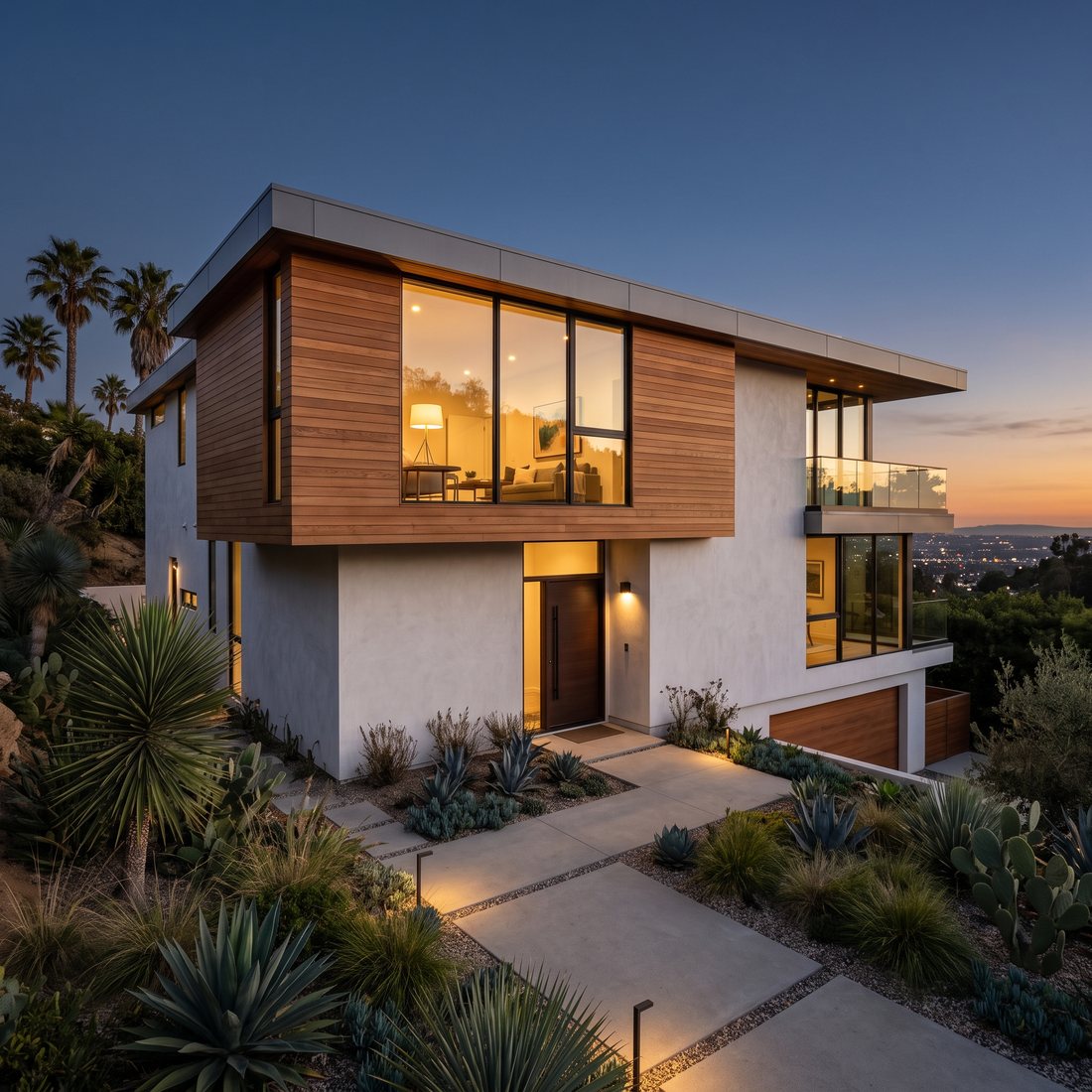
Glendale is its own jurisdiction
This is the part people get wrong first. Glendale does not go through LADBS. It runs its own building and safety division, with its own plan check queue, its own fee schedule, and its own inspectors. So does Burbank. So does Pasadena.
Practically, that means a contractor who works constantly in the City of Los Angeles is not automatically fluent in Glendale, and the schedule they quote you may be built on the wrong department's timelines. Ask directly: how many jobs have you permitted in Glendale?
The age of the housing stock is the budget
Much of Glendale's single-family housing was built between the 1920s and the 1950s — Spanish, Craftsman, and mid-century ranch. Beautiful homes. Also homes that were wired for a refrigerator and two lamps.
What that reliably means:
- Electrical service upgrade. 100-amp panels cannot carry a modern kitchen, an EV charger, and a heat pump. Budget for a 200-amp upgrade.
- Repiping. Galvanized supply lines corrode from the inside. If the water pressure in the back bathroom is bad, that is why.
- Seismic retrofit. Older houses often lack proper foundation bolting and cripple-wall bracing. If you are already opening things up, this is the cheapest it will ever be to fix.
- Abatement. Asbestos in floor mastic and popcorn ceilings, lead in old paint. Pre-1980 houses need testing, not assumptions.
None of this is exotic and none of it is a contractor upselling you. It is what is behind the plaster.
Hillside lots change everything
A large part of Glendale — the Verdugo foothills, Chevy Chase, Glenoaks Canyon — sits on slopes. On a hillside lot, the things that never appear in a flat-lot budget become the budget: grading and retaining walls, drainage that actually survives a wet winter, fire-access and defensible-space requirements, and the plain logistics of getting concrete, steel, and cabinets up a narrow street.
If you are considering an ADU or addition on a hillside lot, get a feasibility check before you get excited about a floor plan.
What this means for your budget
Take whatever number you had in mind for the visible work — the kitchen, the bathrooms, the floors — and carry a real contingency on top for what is behind the walls. Ten percent is optimistic in a 1930s house. Fifteen is honest.
The right contractor tells you this at the walkthrough, not in month three.
What we do
Dn Builders Group Inc Services is based in Burbank, a few minutes from Glendale, and we work across both cities and the rest of Greater Los Angeles. We walk the property, open the panel, ask about the sewer line, and give you a fixed, itemized bid that reflects the house you actually own — not a generic square-foot number.
If you want the wider picture on cost, start with our post on what a whole-home renovation actually takes in Los Angeles.
Dn Builders Group Inc Services is a licensed, bonded general contractor based in Burbank (CA Lic. #1139710), serving Glendale and Greater Los Angeles. Request a walkthrough or call (818) 929-9173. This is general information — confirm current permit requirements and timelines with the City of Glendale.
Questions
Is it faster to get a permit in Glendale than in the City of Los Angeles?
Often, yes. Smaller jurisdictions like Glendale and Burbank generally move faster than LADBS for straightforward residential work, simply because the queue is shorter. That is a tendency, not a promise — a hillside project with structural changes will take real time anywhere. Confirm current timelines with Glendale Community Development before you build a schedule around them.
What surprises people most about remodeling an older Glendale home?
The electrical panel and the plumbing. A lot of Glendale's housing dates to the 1920s through the 1950s, which means 100-amp service (or less), original galvanized supply lines, and sometimes knob-and-tube wiring in the attic. None of that shows up in a walkthrough. All of it shows up when the walls open — and it is not optional once it is found.
Does a hillside lot really change the cost that much?
Yes. Grading, retaining, drainage, and simply getting materials and equipment up to the site all cost money that a flat-lot budget never carries. Fire access requirements and setbacks are stricter as well. It is not unusual for site work alone to add tens of thousands of dollars on a steep Glendale lot.